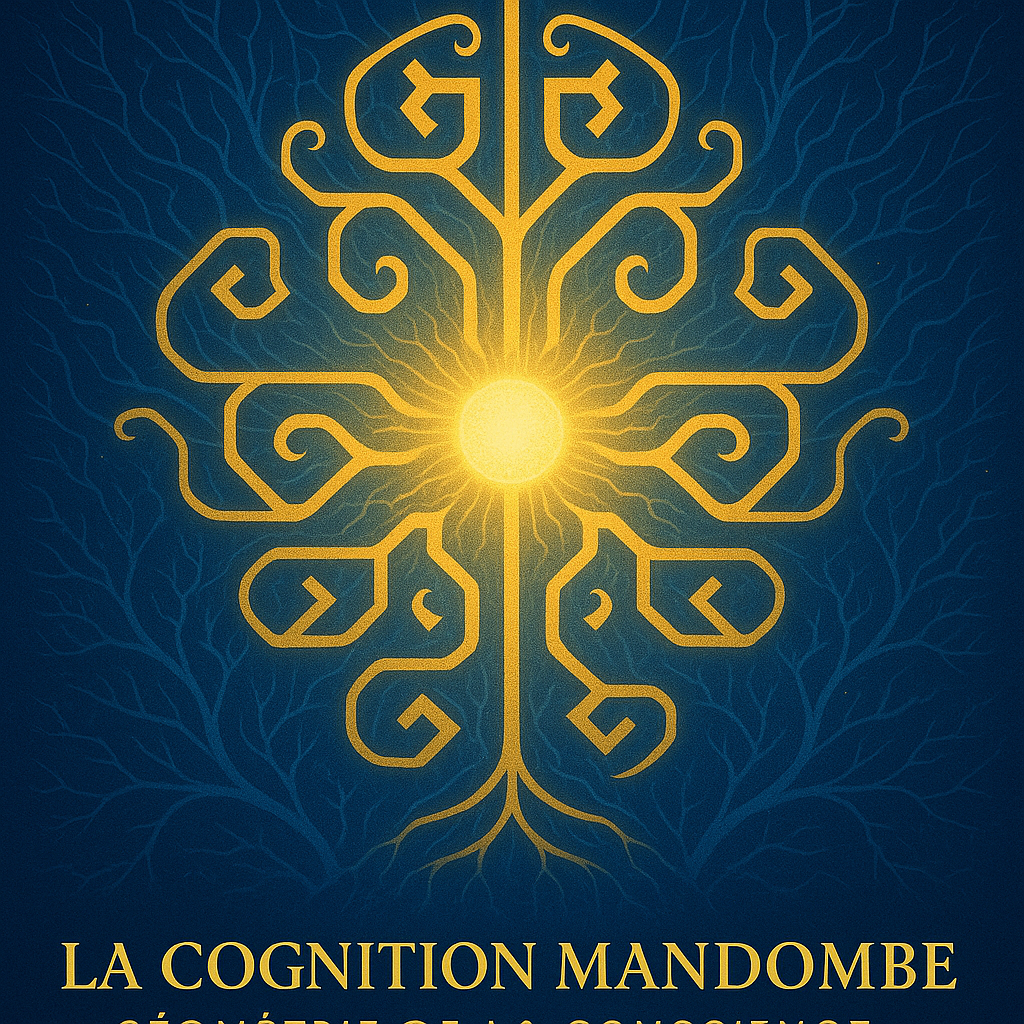
Cognitive Healing Through Symbolic Education: A Therapeutic Framework Based on Mandombe
Mots-clés :
education, Mandombe, Colonial trauma in educationRésumé
Title
Continuous Geometric Training Through Mandombe: Portable EEG Evidence From a Mixed Literacy Cohort in Kinshasa
Ntima et al.
---
Abstract
Most cognitive neuroscience studies of literacy are built on children who learn a single dominant script. In Kinshasa, many adolescents now follow a mixed literacy pathway: Latin script for the national curriculum, plus three hours per week of Mandombe, an indigenous geometric script whose pedagogy systematically trains rotation, symmetry, branching and part–whole completeness. This portable EEG pilot examines whether such sustained but part-time Mandombe exposure is associated with specific changes in visuospatial processing.
We recorded EEG in Nsanda learning centres that piloted the new official Mandombe curriculum and in neighbouring schools that used only Latin script. Adolescents aged 12 to 16 in the Mandombe group (MG) attended regular Latin classes and at least 18 months of weekly Mandombe instruction, while control group (CG) peers followed the same Latin curriculum without Mandombe. Random assignment was not possible, so Nsandas were chosen for feasibility of monitoring and fidelity to the new curriculum. Participants completed three short tasks aligned with Mandombe geometry: rapid discrimination of pseudo-symbols, mental rotation of abstract shapes and completeness judgements for figures that were either finished or missing a branch.
Across tasks, MG showed higher accuracy and shorter reaction times than CG, with the largest differences when stimuli closely resembled Mandombe geometry and medium differences even for non-Mandombe shapes that preserved symmetry, rotation and branch-like structure. EEG data revealed sharper occipito-temporal responses to Mandombe-like patterns in MG, as well as faster and more efficient parietal and frontal dynamics during difficult rotations and completeness judgements. Two CG adolescents with intensive videogame or artistic practice showed partially similar profiles, but did not fully match the breadth of MG advantages.
We interpret these findings as preliminary, mechanistic evidence that three hours per week of structured Mandombe training, on top of Latin literacy, functions as an N-dimensional visuospatial practice that leaves measurable traces in how adolescents see, rotate and complete shapes. Given the non-randomised, single-site design and deliberate alignment between tasks and curriculum geometry, the results are hypothesis-generating. Larger longitudinal studies, including upcoming full-time Mandombe cohorts, will be needed to separate training from selection and to map the limits of these effects.
---
1. Introduction
In most schooling systems, literacy research quietly assumes a single dominant script. A child learns to read and write in Latin, Arabic or Han characters, and cognitive measures are interpreted against that background. In the Democratic Republic of Congo, the reality in some urban centres is already more complex. Adolescents in Kinshasa can now follow a mixed literacy pathway where Latin script remains the medium of the national curriculum, while an indigenous script, Mandombe, is introduced as a structured weekly practice.
Mandombe is not simply a new alphabet with different shapes. Its pedagogy is explicitly geometric. Learners manipulate mvuala base forms, branches, rotations, mirrorings, simple homothetic scalings and part–whole relations. Correct writing is explicitly framed as getting orientation, branching and completeness right. Reading and writing thus become continuous micro-geometry in at least three conceptual dimensions: position, orientation and branching depth. Over time, these operations are extended into number, simple physics and project work.
Previous work inside the MEN-D programme has described striking behavioural effects in children educated predominantly through Mandombe, including unusual compression of schooling cycles and rapid advances in mathematics when compared with national norms. Those studies, however, have relied on grades, classroom observations and paper-and-pencil tests. They show that something different is happening, but not how the brain is organising the underlying visuospatial work.
The present study takes a modest step into that gap. We focus on Nsanda learning centres in Kinshasa that piloted the new official Mandombe curriculum in a realistic mixed setting: three hours of Mandombe per week, alongside the standard Latin-based national curriculum. A full-time Mandombe stream is being prepared, but was not yet in place. Random assignment was not feasible in this context, so we selected Nsandas where monitoring and documentation were easiest and contrasted them with nearby schools that used only Latin script.
Our question is simple and concrete. In adolescents who already read and write Latin like their peers, does adding three hours per week of sustained Mandombe training leave a detectable trace in brain activity for tasks that live in the same geometric universe as the script? We do not ask whether Mandombe creates new brain regions, nor whether it makes children globally smarter. We ask whether continuous exposure to its particular geometry changes how efficiently existing visuospatial networks are used.
To answer this, we use a low-cost, Raspberry-Pi-driven EEG setup that can be deployed inside schools. We compare a Mandombe group and a Latin-only group on three short tasks: symbol discrimination, mental rotation and completeness judgements. All three are built from the operations that Mandombe drills every week. The design is deliberately aligned, cross-sectional and conservative in its claims. The goal is to produce a plausible mechanistic picture that can guide the more ambitious full-time cohort studies that follow.
---
2. Method
2.1 Setting and design
The study took place in Kinshasa between 2019 and 2023. Nsanda centres in the CENA network that piloted the new Mandombe curriculum were selected because they already had systematic record-keeping and stable teaching teams. In these centres, adolescents followed the national curriculum in Latin script and received an additional three hours per week of Mandombe instruction delivered according to the official MEN-D programme.
Comparison schools were public or low-fee private institutions in the same neighbourhoods that used Latin script only and did not offer Mandombe. Random allocation to Mandombe was not possible because Mandombe centres are specialised and parents actively choose them. The design is therefore quasi-experimental and single city.
2.2 Participants
Participants were 60 adolescents aged 12 to 16 years. The Mandombe group (MG) comprised 30 learners (15 girls, 15 boys) from Nsanda pilot centres. Inclusion criteria were: at least 18 months of documented Mandombe classes at a minimum of three hours per week, continuous attendance in the same centre during that period, and enrolment in the standard Latin-based curriculum. The control group (CG) comprised 30 learners (15 girls, 15 boys) from nearby Latin-only schools, matched on age, sex, school type and approximate academic level.
All participants were right handed, with normal or corrected vision, and reported no history of neurological disorders. Parents or guardians provided written informed consent, and adolescents provided assent. The study protocol was reviewed and approved by the relevant educational and local ethics committees.
Information on extra-curricular visuospatial activities was collected by short structured interview. Most adolescents reported occasional phone games or drawing at school margins. Two CG participants reported much higher engagement. One played fast-paced, three-dimensional console videogames almost daily, often for several hours. The other engaged in frequent, self-directed drawing with strong attention to fine detail. These two outliers are treated explicitly in the analyses.
2.3 EEG hardware and software
EEG was recorded with a portable mid-range 8 to 16 channel system suitable for classroom use. Electrodes were placed at standard positions including occipital sites (O1, O2), parietal sites (P3, P4, Pz), central (Cz) and frontal (Fz), with linked mastoids as reference. Impedances were kept within manufacturer recommendations.
A Raspberry Pi 4 microcomputer controlled stimulus presentation and event marking. Tasks were programmed in Python using PsychoPy and displayed on a 15-inch LCD screen at a viewing distance of approximately 60 cm. Responses were collected via a simple two-button input device.
EEG signals were sampled at 250 to 500 Hz depending on hardware, band-pass filtered online between 0.1 and 40 Hz and stored for offline analysis.
2.4 Tasks and procedure
Each adolescent completed three EEG tasks in a single session lasting about 40 minutes including setup and breaks. Task order was counterbalanced across participants.
2.4.1 Symbol discrimination
This task assessed early visual processing and script-linked tuning. Stimuli were two families of pseudo-symbols:
Mandombe-like symbols constructed from mvuala base forms and branch segments, respecting the script’s geometry but not forming real letters or words.
Latin-like symbols constructed from Latin strokes arranged into novel, non-letter shapes.
Stimuli were presented in rapid streams. On each trial a symbol appeared for 200 ms, followed by a blank screen. On 20 percent of trials, the symbol repeated exactly on the next presentation. Participants pressed a button whenever they detected an immediate repetition and withheld responses otherwise. Both symbol families were presented in separate blocks with identical instructions.
2.4.2 Mental rotation
This task tested rotation performance without any script content. Stimuli were abstract 2D shapes with no resemblance to real letters. On each trial, a target shape appeared at the top of the screen and two comparison shapes appeared below, one a rotated version of the target and the other a different shape. Rotation angles between target and correct alternative were 0, 45, 90, 135 or 180 degrees.
Participants indicated by button press which lower shape matched the target. Trials were self-paced with a maximum response window, and angles were randomly intermixed. There were enough trials at each angle to compute reliable behavioural and EEG averages.
2.4.3 Completeness judgement
This task probed part–whole reasoning and the “missing branch” logic. Participants saw single shapes and had to decide whether each was complete or incomplete.
The first block used shapes inspired by Mandombe geometry. These were constructed from mvuala-like bases with branch segments, some of which were deliberately missing. The second block used non-Mandombe figures that nevertheless shared structural properties such as bilateral symmetry, branch-like protrusions and simple homothetic scaling. Each shape appeared briefly, followed by a blank screen. Participants responded complete or incomplete via buttons.
2.5 EEG preprocessing and analysis
Data were processed offline using standard pipelines. Continuous EEG was band-pass filtered between 0.1 and 30 Hz. Trials with gross artefacts, eye blinks or excessive movement were rejected based on visual inspection and thresholding. On average, 82 percent of trials per participant were retained, with no significant difference in retention between groups.
For event-related potential (ERP) analysis, data were segmented into epochs time-locked to stimulus onset with appropriate pre-stimulus baselines. ERP components of interest were:
N170 and P2 over occipito-temporal electrodes for symbol processing.
P3 or late positive components over parietal sites for rotation and completeness tasks.
For time–frequency analysis, we computed power changes in frontal theta (4 to 7 Hz) and parietal alpha (8 to 12 Hz) bands relative to baseline, focusing on early post-stimulus windows.
Behavioural accuracy and reaction times were analysed with mixed analyses of variance with group and condition (symbol family, rotation angle, completeness) as factors. EEG measures were analysed with similar models, with an emphasis on a small, pre-defined set of electrodes and time windows. We report effect sizes and confidence intervals alongside p-values. All analyses were repeated with and without the two high training CG outliers to examine robustness.
---
3. Results
3.1 Sample and data quality
All participants completed the three tasks. Behavioural performance was above chance in both groups for all tasks, indicating that the tasks were understandable and not excessively difficult. After artefact rejection, usable EEG trial counts did not differ significantly between groups. The portable recording environment did not introduce obvious systematic noise differences between Nsandas and comparison schools.
The videogame-heavy and artistic CG adolescents fell within the normal range for artefacts and trial retention.
3.2 Symbol discrimination
3.2.1 Behaviour
MG achieved higher accuracy than CG for detecting immediate repetitions of symbols in both Mandombe-like and Latin-like blocks. Group differences were largest for Mandombe-like stimuli. Reaction times for correct detections were shorter in MG in both blocks. CG performance remained clearly above chance but showed broader dispersion, with several slower and less accurate participants.
The two high training CG adolescents performed near the upper end of the CG distribution. The gamer showed fast responses, especially in Latin-like blocks, while the artist showed high accuracy but not exceptional speed. Neither outlier consistently matched MG performance on both symbol families.
3.2.2 EEG
In both groups, symbol presentation elicited a clear N170/P2 complex over posterior electrodes. For Mandombe-like symbols, MG displayed larger N170 amplitudes and slightly earlier P2 peaks compared to CG. For Latin-like symbols, group differences were smaller and not consistently directed.
Within MG, N170/P2 responses were stronger for Mandombe-like than for Latin-like symbols, suggesting tuning to the geometry of their additional script. Within CG, differences between symbol families were weaker and less reliable. Time–frequency analysis showed a modest increase in parietal alpha suppression in MG following Mandombe-like stimuli, which was attenuated in CG.
When the two high training CG participants were excluded, the general pattern remained. Their individual ERPs resembled MG profiles more than the CG average, consistent with their extra visuospatial practice.
3.3 Mental rotation
3.3.1 Behaviour
Both groups showed the expected decline in accuracy and increase in reaction time as rotation angle increased. MG performed at least as well as CG at low angles and clearly better at 90 degrees and above. At 135 and 180 degrees, MG maintained relatively high accuracy and manageable reaction times, while CG performance dropped more sharply.
The gamer in CG performed very well at intermediate angles that resembled his usual gameplay, but his performance on the most extreme rotations was within the MG range rather than surpassing it. The artist in CG showed only modest advantages over her peers.
3.3.2 EEG
Across participants, mental rotation produced a pronounced parietal P3 or late positive component and systematic modulation of frontal theta and parietal alpha. Harder rotations elicited larger P3 amplitudes and stronger frontal theta, coupled with increased parietal alpha suppression.
MG tended to show shorter P3 latencies over parietal electrodes for rotation angles of 90 degrees and above, with amplitudes equal to or slightly lower than those of CG. MG also showed lower frontal theta power and a more focal pattern of parietal alpha suppression for hard rotations, despite equal or better behavioural performance. In CG, hard rotations produced higher frontal theta and less focused alpha changes.
These patterns are consistent with more efficient recruitment of visuospatial networks in MG. They process difficult rotations with similar or less sustained effort and faster evaluative responses than CG. Including or excluding the gamer and artist in CG altered effect sizes but did not change the direction of group differences. Their individual data again fell between the CG average and MG profiles.
3.4 Completeness judgements and generalisation
3.4.1 Behaviour
In completeness judgements, MG outperformed CG on both Mandombe-inspired and non-Mandombe shapes. For Mandombe-inspired figures, MG showed higher accuracy and shorter reaction times, with some participants approaching ceiling performance. For non-Mandombe figures that nevertheless shared symmetry, branch-like protrusions and homothetic scaling, MG still responded faster and more accurately than CG, although differences were smaller.
The gamer and artist in CG did particularly well on subsets of stimuli that resembled their everyday visuospatial activities. The gamer excelled on angular, technical-looking figures, while the artist showed high accuracy on detailed shapes. However, on complex items that combined rotation, symmetry and subtle missing branches, MG as a group still outperformed them.
3.4.2 EEG
Incomplete figures elicited larger P3 or late positive components over parietal electrodes than complete figures in both groups. In MG, these responses were larger in amplitude and earlier in latency, especially for Mandombe-inspired shapes but also, to a lesser extent, for non-Mandombe shapes.
Parietal alpha suppression was stronger and more sustained in MG for incomplete trials, suggesting robust engagement of visuospatial evaluative processes. Frontal theta increases for incomplete shapes were smaller and more transient in MG than in CG, again pointing to a pattern of efficient, trained processing rather than heavy reliance on controlled effort.
Removing the two high training CG participants slightly reduced group effect sizes but did not eliminate them. Their individual traces showed enhanced responses for specific stimulus subclasses, in line with their hobbies, rather than a broad pattern matching MG.
---
4. Discussion
4.1 Summary
This portable EEG pilot shows that adolescents in Kinshasa who follow a mixed literacy pathway with Latin script plus three hours of Mandombe per week display systematic behavioural and neuroelectric differences on a set of geometrically aligned tasks, compared with peers who only learn Latin. Mandombe learners are faster and more accurate when discriminating branch-rich pseudo-symbols, mentally rotating abstract shapes and judging whether complex figures are complete or missing a branch. Their brains respond with sharper early visual tuning to Mandombe-like geometry and with more efficient parietal and frontal dynamics during demanding visuospatial processing.
These differences persist when shapes are no longer visually recognisable as script characters but still reuse the operations that Mandombe drills every week. They are not fully explained by extra-curricular visuospatial activities, although high practice in gaming or art can partially move Latin-only learners toward the same profile. The pattern points to continuous symbolic training as the most plausible mechanism.
4.2 Mandombe as continuous geometric training in a mixed literacy context
An important feature of this cohort is that Mandombe is not replacing Latin script. All adolescents attend the same Latin-based curriculum. The difference is that MG spends an additional three hours per week in a script that is explicitly geometric and relational.
Every Mandombe session asks learners to track orientation, branch position, symmetry and completeness. Correct writing means getting these aspects right, not just copying visual appearances. Over 18 months or more, this produces thousands of repetitions of the same underlying operations. In effect, Mandombe functions as a daily micro-geometry lab that sits beside Latin reading and writing rather than displacing them.
The present results suggest that this extra lab time leaves a trace. Mandombe learners do not just recognise Mandombe-like shapes more easily. They handle a family of tasks built from rotation, symmetry, branch structure and part–whole completeness more efficiently, even when those tasks use unfamiliar shapes. In that sense, Mandombe appears to train a geometric workspace that sits on top of the usual Latin literacy and can generalise to other stimuli that live in the same conceptual space.
4.3 Training, not essence
The two control adolescents with intensive videogame and drawing practice are a useful check against essentialist interpretations. They demonstrate that sustained visuospatial training outside school can produce enhancements on the same kinds of tasks and EEG measures. Their presence in the data supports a simple, non-mystical claim: brains adapt to what they do often.
If Mandombe were inert, MG and CG would look similar once general academic level and hobbies were taken into account. They do not. If Mandombe effects were purely intrinsic and unrelated to training, extra practice from games or drawing would not matter. It does. Instead we see three layers:
Latin-only learners with little extra visuospatial training.
Latin-only learners with heavy gaming or art practice, showing narrow task-specific gains.
Latin plus structured Mandombe learners, showing broad advantages across geometrically aligned tasks.
This layered pattern is exactly what one would expect if Mandombe functions as a structured, curriculum-embedded practice in N-dimensional geometry, while hobbies provide more irregular, self-selected training.
4.4 Relation to script and training literatures
The finding that Mandombe learners show stronger N170/P2 responses to Mandombe-like symbols is consistent with previous work on script tuning, where visual word-form regions adapt to the dominant script. The novelty here is that this tuning appears on top of Latin literacy, rather than instead of it.
The convergent effects across rotation and completeness tasks mirror training studies in gaming, music and abacus practice, where sustained domain-specific activity produces multiple small to medium improvements on tasks that reuse the trained operations. The current study extends this logic to an indigenous script. It suggests that literacy choices are not neutral with respect to cognitive training. A script that encodes and rehearses geometric relations may cultivate visuospatial operations in ways that a more linear, phoneme-based script does not.
4.5 Limitations and open questions
These conclusions are bounded by several limitations. The cohort is limited to a small number of Nsanda pilot centres in one city. Families who choose these centres may differ in motivation and values. Teachers may be more experimental or more committed than those in comparison schools. The design is cross-sectional and non-randomised, so it cannot establish effect sizes for Mandombe training relative to selection and pedagogy.
Tasks were deliberately aligned with Mandombe geometry. This makes the study sensitive to curriculum-linked effects, but tells us little about transfer to domains that do not share this structure. We did not include neutral cognitive tasks where no group difference was expected, which would help confirm domain specificity. The EEG system, while adequate for the questions asked, had limited spatial resolution, and the sample size is modest by multi-site standards.
The findings are therefore best understood as mechanistic and hypothesis-generating. They show that mixed Latin plus Mandombe instruction is associated with specific patterns of visuospatial processing. They do not show that Mandombe is the only path to such patterns, nor that it improves all aspects of cognition or mental health.
4.6 Implications and next steps
Within these limits, the study has several practical and conceptual implications.
First, for educational planning, it suggests that even part-time Mandombe instruction can act as a structured cognitive training regime. Three hours per week appears to be enough to shift how adolescents process geometric information, on top of the Latin literacy they share with their peers. This invites serious consideration of script design and curriculum structure as tools for shaping cognitive practice, not only as carriers of language.
Second, as a pilot for the forthcoming full-time Mandombe cohorts, the study provides a template. It shows that portable, low-cost EEG is feasible in Nsandas, that tasks aligned with curriculum geometry can detect meaningful differences, and that analytic pipelines can handle the realities of school data. Future work can build on this to follow cohorts from pre-Mandombe exposure into full-time programmes, track the emergence of these neuroelectric patterns over time and test how they relate to mathematics, science and problem-solving.
Third, the findings open specific questions for DSM-H and broader decolonial frameworks. If colonial schooling under-trained visuospatial and relational capacities, as those frameworks suggest, then incorporating an indigenous script with explicit geometric structure may be one way to restore that balance. This study does not measure clinical outcomes, so any mental health claims remain conceptual. It does, however, provide a concrete example of how symbolic choices in education can reshape a core cognitive workspace.
In the immediate term, three lines of research suggest themselves. One is replication in additional Nsandas and Latin-only schools, including rural contexts. A second is the inclusion of neutral control tasks and more diverse cognitive measures to map the boundaries of Mandombe-linked effects. A third is the careful study of upcoming full-time Mandombe cohorts, where dosage and exclusivity will be higher and where stronger inferences about training trajectories may be possible.
---
5. Conclusion
Adolescents in Kinshasa who learn Latin script plus three hours of Mandombe per week process a particular class of visuospatial tasks differently from peers who learn Latin alone. The difference is not global. It appears wherever the task reuses the geometry that Mandombe drills week after week: rotation, symmetry, branches and part–whole completeness. Their brains respond more quickly and efficiently in those contexts, much as they do in adolescents who train intensively in videogames or art, but with a broader and more systematic profile.
This is not evidence of superiority in any essential sense. It is evidence that continuous symbolic training matters, and that an indigenous script can serve as a powerful training field for operations that Western curricula often treat as peripheral. In that sense, Mandombe is more than an extra subject. It is a daily practice that quietly rearranges how young people see and work with structure in space.