Vol. 26 No. 1 (2022): Scripts of Power: Writing, Epistemic Warfare and Political Order
This issue of the USK Journal of Political Science and Epistemology opens with a simple, unsettling question: who writes the world we live in? From Papal Bulls that sanctified conquest to the colonial grammars that dissected African languages, political domination has always been a question of script and speech long before it became a question of armies and banks.
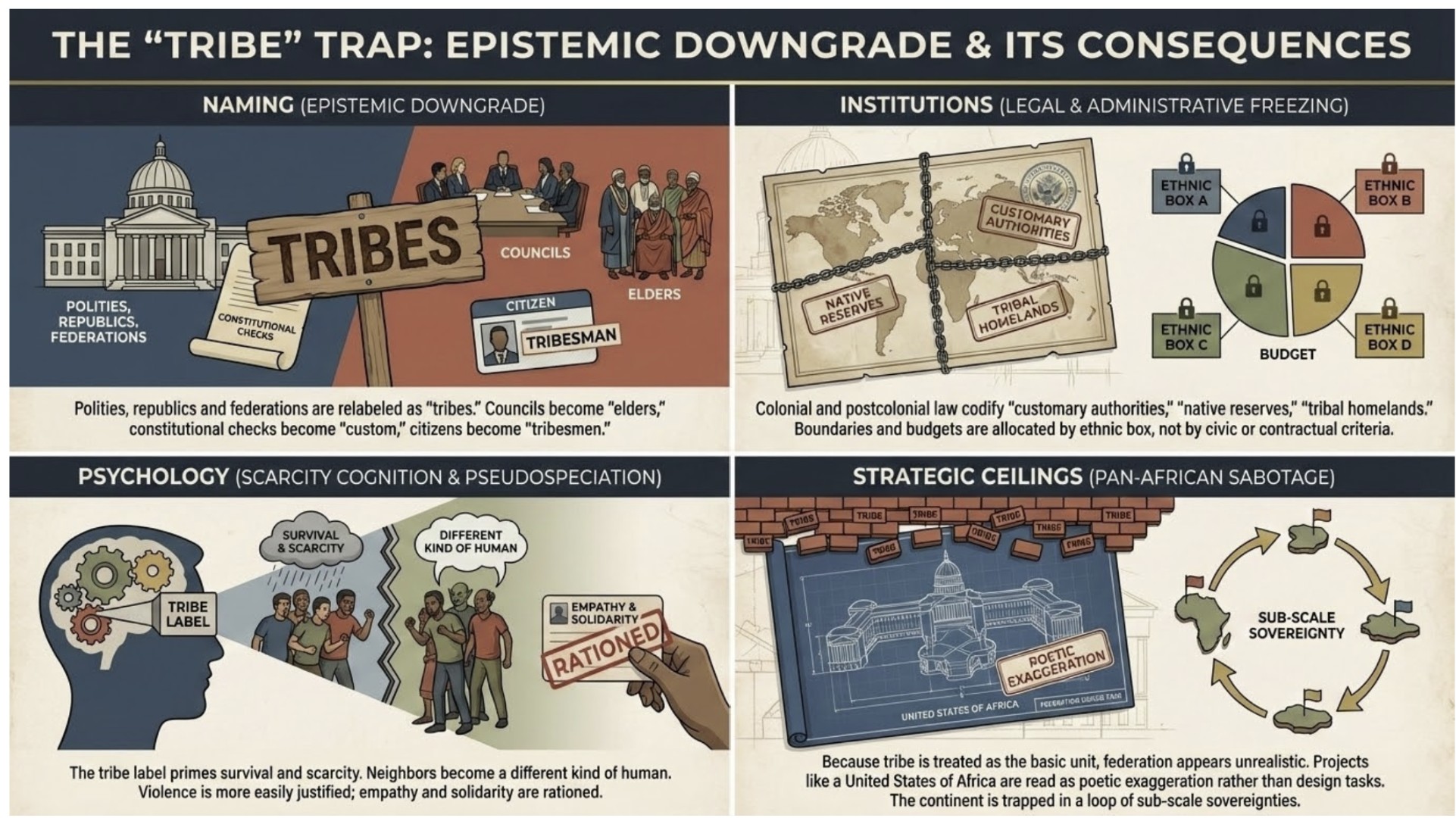
Bringing together political science, linguistics, theology and decolonial epistemology, the issue argues that the African crisis is not only institutional or economic but symbolic. In the lead article, Kibavuidi Nsiangani revisits his programmatic work Pan-Africanism Reimagined (2010) to show how sentimental calls to unity have replaced the hard engineering of federative institutions. He links this failure to deeper patterns of manipulation described in his later clinical analysis of imperial behaviour (The Dark Tetrad Traits of Empire, 2014) and to the long history of “scriptural sovereignty” built by Europe over Africa.
The other contributions explore different faces of this symbolic struggle: Mandombe as an epistemology of power rather than a folkloric curiosity; language through the example of Kikongo as a dense, prototype-like language whose internal logic was fragmented by colonial lexicography; the genealogy of theological and legal texts from Papal decrees to policy briefs that normalised dispossession; and the university as a contemporary battlefield where curricula, languages and citation regimes either prolong or contest this order. Together, these articles sketch the outlines of a research programme in which political institutions, linguistic structures and writing systems are analysed as one and the same field of combat.
Rather than closing the debate, the issue deliberately leaves open questions for future work: how to model political prediction using African symbolic systems, how to design federative mechanisms that are faithful to indigenous grammars of relation, and how to build clinical tools capable of diagnosing the structural pathologies of empire. What is clear already is that no durable sovereignty is possible without a revolution in how Africa writes, speaks and teaches itself.